
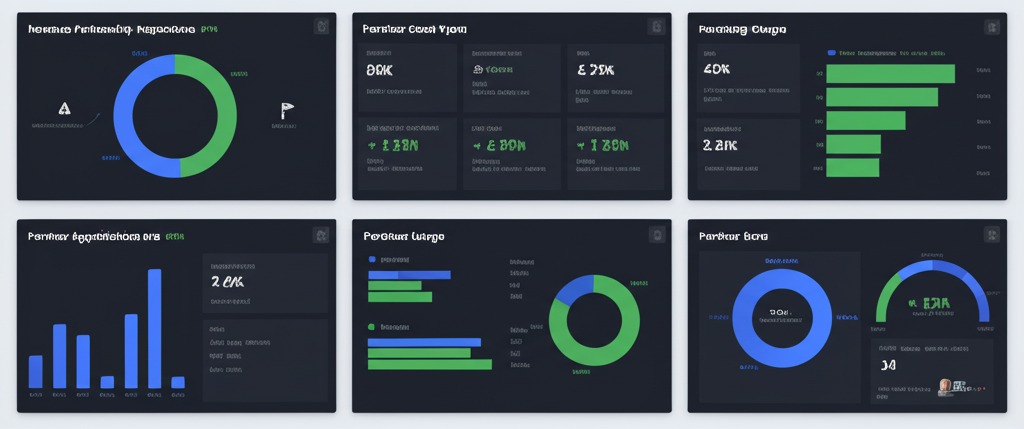
A successful partner program can significantly accelerate business growth, expand market reach, and create new revenue streams. However, without proper measurement, it's impossible to determine whether your partner initiatives are delivering the expected return on investment or identify opportunities for optimization.
This comprehensive guide explores the key metrics and KPIs that every partner program manager should track to evaluate performance, demonstrate value to stakeholders, and drive continuous improvement.
The Partner Program Measurement Framework
Effective measurement requires a structured approach that considers multiple dimensions of partner program performance. We recommend organizing your metrics into these five categories:
- Partner Acquisition and Activation
- Partner Engagement and Enablement
- Revenue and Financial Impact
- Customer Success and Satisfaction
- Operational Efficiency
Let's explore the specific metrics within each category.
1. Partner Acquisition and Activation Metrics
These metrics help you evaluate Partner Acquisition and Activation Metrics
These metrics help you evaluate the effectiveness of your partner recruitment efforts and the initial onboarding process:
- Partner Recruitment Rate: The number of new partners added to your program over a specific period
- Partner Application Conversion Rate: The percentage of partner applications that convert to active partners
- Time to First Deal: Average time from partner onboarding to their first closed deal
- Partner Activation Rate: Percentage of partners who have completed key activation milestones (training, certification, first deal registration, etc.)
- Partner Acquisition Cost (PAC): Total cost of recruiting and onboarding new partners divided by the number of activated partners
2. Partner Engagement and Enablement Metrics
These metrics measure how actively partners are participating in your program and utilizing available resources:
- Portal Engagement: Frequency and depth of partner portal usage
- Training Completion Rates: Percentage of partners completing available training and certification programs
- Marketing Asset Utilization: Frequency and types of marketing materials being accessed and deployed
- Deal Registration Activity: Number of deals registered per partner over time
- Partner Satisfaction Score: Measured through regular surveys and feedback mechanisms
- Partner Churn Rate: Percentage of partners becoming inactive or leaving the program
3. Revenue and Financial Impact Metrics
These metrics quantify the business impact of your partner program:
- Partner-Influenced Revenue: Total revenue where partners played a role in the sales process
- Partner-Sourced Revenue: Revenue from opportunities that partners originated
- Partner Revenue Growth Rate: Year-over-year growth in partner-generated revenue
- Average Deal Size: Average value of partner-involved transactions
- Partner Contribution to Pipeline: Percentage of sales pipeline attributed to partner activities
- Partner Program ROI: Total partner-generated revenue divided by program costs
- Revenue per Partner: Average revenue generated per active partner
4. Customer Success and Satisfaction Metrics
These metrics assess the quality of partner-led customer experiences:
- Customer Satisfaction Score (CSAT): Satisfaction ratings for partner-led implementations or sales
- Net Promoter Score (NPS): Likelihood of customers to recommend partner-delivered solutions
- Customer Retention Rate: Percentage of partner-acquired customers who renew
- Implementation Time: Average time for partners to implement solutions
- Support Ticket Volume: Number of support issues from partner-acquired customers
- Customer Lifetime Value: Long-term value of partner-acquired customers
5. Operational Efficiency Metrics
These metrics help evaluate the operational aspects of your partner program:
- Deal Registration Processing Time: Average time to approve or reject deal registrations
- Partner Support Response Time: Average time to respond to partner inquiries
- MDF Utilization Rate: Percentage of allocated market development funds actually used
- MDF ROI: Return generated from market development fund investments
- Partner Manager Capacity: Number of partners effectively managed per partner manager
- Program Cost Ratio: Partner program costs as a percentage of partner-generated revenue
Implementing Effective Measurement Practices
To maximize the value of these metrics, follow these best practices:
1. Establish Baselines and Targets
For each key metric, establish:
- Current baseline performance
- Industry benchmarks (where available)
- Realistic improvement targets
- Measurement frequency and methodology
2. Implement Tiered Analysis
Analyze metrics across different dimensions:
- By partner tier or level
- By partner type (reseller, referral, technology, etc.)
- By geography or market segment
- By partner tenure (new vs. established)
3. Create Actionable Dashboards
- Develop role-specific dashboards for different stakeholders
- Highlight trends and patterns rather than just point-in-time data
- Include leading indicators that predict future performance
- Ensure dashboards drive action, not just reporting
4. Establish a Regular Review Cadence
- Weekly operational reviews of key activity metrics
- Monthly performance reviews with the partner team
- Quarterly business reviews with key partners
- Annual program assessment and strategic planning
Conclusion: From Measurement to Optimization
Effective measurement is not the end goal but rather the foundation for continuous improvement of your partner program. By tracking these key metrics and KPIs, you can:
- Identify high-performing partners and replicate their success factors
- Detect struggling partners early and provide targeted intervention
- Optimize resource allocation based on ROI analysis
- Demonstrate the value of your partner program to executive stakeholders
- Make data-driven decisions about program investments and evolution
Remember that the most valuable metrics for your specific program will depend on your business model, partner types, and strategic objectives. Start with the core metrics outlined in this guide, then refine your measurement framework as your partner program matures and evolves.
By establishing a culture of measurement and continuous improvement, you'll build a partner program that delivers sustainable value for your organization, your partners, and your customers.