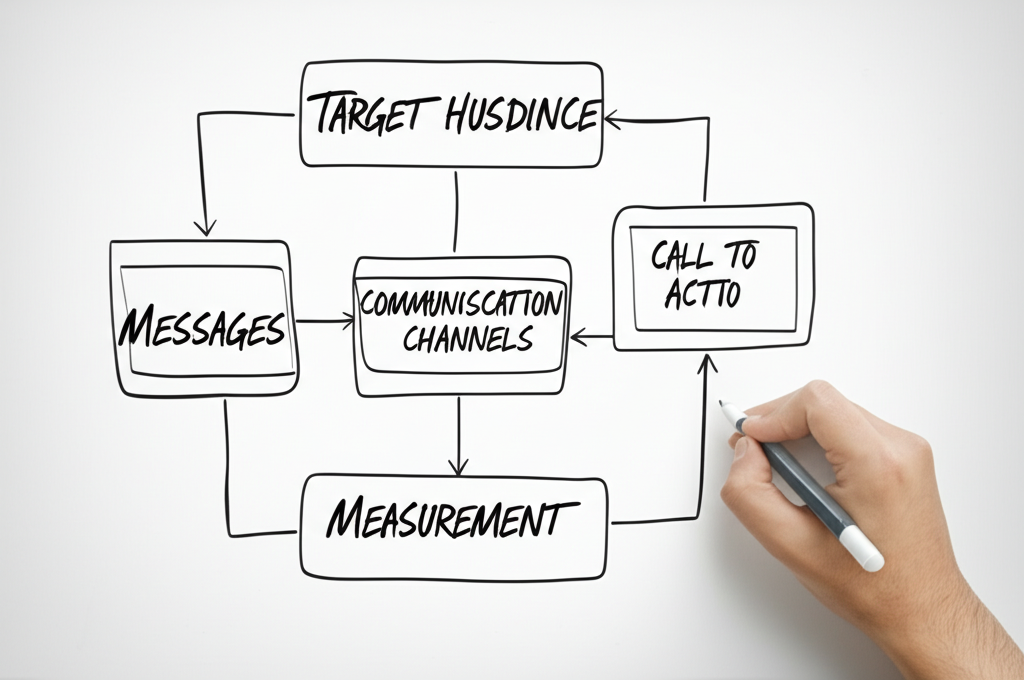
In the complex world of B2B sales, effective messaging can be the difference between winning deals and losing opportunities. A well-crafted messaging framework ensures that everyone in your organization—from marketing to sales to customer success—communicates consistently about your value proposition in ways that resonate with prospects and customers.
This guide will walk you through the process of creating a powerful B2B messaging framework that aligns with buyer needs and drives sales conversations forward.
What is a Messaging Framework?
A messaging framework is a structured approach to organizing and articulating your company's value proposition, differentiators, and key selling points. It serves as the foundation for all customer-facing communications, ensuring consistency while allowing for customization based on specific audience segments and buying contexts.
An effective B2B messaging framework typically includes:
- Core value proposition and positioning statement
- Key audience personas and their specific pain points
- Primary and secondary messaging pillars
- Supporting evidence and proof points
- Competitive differentiation statements
- Common objections and recommended responses
The 7-Step Process to Create Your Messaging Framework
Step 1: Understand Your Audience
Effective messaging begins with a deep understanding of your target audience. For each key buyer persona, document:
- Role and responsibilities: What does their day-to-day job entail?
- Business objectives: What are they measured on and rewarded for?
- Pain points: What challenges are they facing that your solution addresses?
- Decision criteria: What factors influence their purchasing decisions?
- Information sources: Where do they go to learn and stay informed?
- Objections: What concerns might they have about your solution?
Remember that in B2B sales, you'll often need to address multiple stakeholders with different priorities. Your messaging framework should account for these variations while maintaining a consistent core narrative.
Step 2: Clarify Your Value Proposition
Your value proposition is the foundation of your messaging framework. It should clearly articulate:
- What you offer
- Who it's for
- What problems it solves
- How it's different from alternatives
- What specific outcomes customers can expect
A strong value proposition formula follows this structure:
For [target customer] who [statement of need or opportunity], our [product/service] provides [key benefit]. Unlike [competing alternative], we [key differentiator].
Example:
"For B2B sales organizations struggling with long sales cycles and low conversion rates, our sales enablement platform provides AI-powered conversation intelligence and guided selling. Unlike generic CRM add-ons, we deliver industry-specific guidance that increases win rates by an average of 32%."
Step 3: Develop Your Messaging Pillars
Messaging pillars are the 3-5 core themes that support your value proposition. Each pillar should address a key customer pain point or business need, and be supported by specific features, benefits, and proof points.
For each messaging pillar:
- Create a clear, compelling headline
- Develop a concise description (2-3 sentences)
- List the key features that deliver on this promise
- Articulate the specific benefits customers will experience
- Compile evidence that supports your claims (case studies, statistics, testimonials)
Example Messaging Pillar:
Accelerate Deal Velocity
Our platform identifies bottlenecks in your sales process and provides actionable recommendations to move deals forward faster. By analyzing thousands of successful deals, we help your team focus on the right activities at the right time.
- Features: Deal momentum scoring, Next-best-action recommendations, Stall pattern alerts
- Benefits: 28% shorter sales cycles, 45% reduction in stalled opportunities, More accurate sales forecasting
- Proof Points: Case study with Company X showing 35% faster deal closure, Industry benchmark data, ROI calculator
Step 4: Craft Your Competitive Differentiation
Clear differentiation is essential in crowded B2B markets. Your messaging framework should include specific statements that position your solution against key competitors and alternative approaches.
For each major competitor or category alternative:
- Identify their key strengths and weaknesses
- Determine where you have clear advantages
- Develop messaging that highlights these differences without directly attacking competitors
- Create comparison frameworks that favorably position your unique approach
Effective differentiation focuses on your unique strengths rather than simply claiming to be "better" in generic ways. It should be specific, demonstrable, and relevant to customer priorities.
Step 5: Address Common Objections
Every B2B sale faces objections. Your messaging framework should anticipate these concerns and provide clear, consistent responses that address them effectively.
For each common objection:
- Document the specific concern in the customer's language
- Develop a thoughtful, empathetic response
- Provide supporting evidence that addresses the underlying concern
- Include customer stories that demonstrate how others overcame similar hesitations
Example:
Objection: "Your solution seems powerful, but we're concerned about the implementation time and effort required."
Response: "That's a common concern we hear. We've designed our platform specifically to minimize implementation time, with most customers fully operational within 3 weeks. Our dedicated implementation team handles the heavy lifting, requiring just 4-6 hours of your team's time. For example, Company Y was concerned about the same issue but was up and running in 17 days with minimal disruption to their sales activities."
Step 6: Adapt Messaging for Different Stages of the Buyer's Journey
Effective messaging evolves as prospects move through their buying process. Your framework should include variations tailored to each stage:
- Awareness Stage: Focus on pain points and challenges, with messaging that helps prospects recognize and name their problems
- Consideration Stage: Emphasize your approach and differentiation, with messaging that educates on solution options
- Decision Stage: Highlight specific outcomes and implementation details, with messaging that reduces perceived risk and builds confidence
For each stage, provide specific talking points, content recommendations, and customer stories that align with the buyer's information needs and decision criteria at that point.
Step 7: Test and Refine Your Messaging
Messaging frameworks should be living documents that evolve based on market feedback and sales results. Implement a process for:
- Testing new messaging with target audiences
- Gathering feedback from sales teams on what resonates
- Analyzing which messages correlate with sales success
- Regularly updating the framework based on competitive changes and market shifts
Consider A/B testing different messaging approaches in your marketing materials and sales presentations to identify what drives the best engagement and conversion.
Implementing Your Messaging Framework
Creating a messaging framework is only valuable if it's actually used. To drive adoption:
1. Make It Accessible
- Create a centralized, easily accessible repository for all messaging materials
- Develop quick-reference guides for different user groups (sales, marketing, customer success)
- Provide both comprehensive documentation and simplified job aids
2. Enable Your Teams
- Conduct training sessions on how to use the messaging framework effectively
- Create application exercises that help teams practice adapting the messaging
- Develop playbooks that show how to use the messaging in different scenarios
- Record video examples of the messaging being used effectively
3. Reinforce Consistent Usage
- Include messaging review in your content creation process
- Recognize and share examples of effective messaging application
- Incorporate messaging proficiency into relevant performance metrics
- Regularly review call recordings and customer communications to ensure alignment
Conclusion: The Competitive Advantage of Consistent Messaging
In B2B sales, where buying decisions involve multiple stakeholders and extended consideration, consistent, compelling messaging is a significant competitive advantage. A well-crafted messaging framework ensures that every customer interaction reinforces your value proposition and differentiators in ways that resonate with your target audience.
By following this seven-step process, you can develop a messaging framework that not only articulates your value clearly but also equips your entire organization to communicate consistently and effectively across all customer touchpoints.
Remember that the most effective messaging frameworks balance structure with flexibility—providing clear guidance while allowing for authentic, conversational delivery that can be tailored to specific customer contexts and needs.